
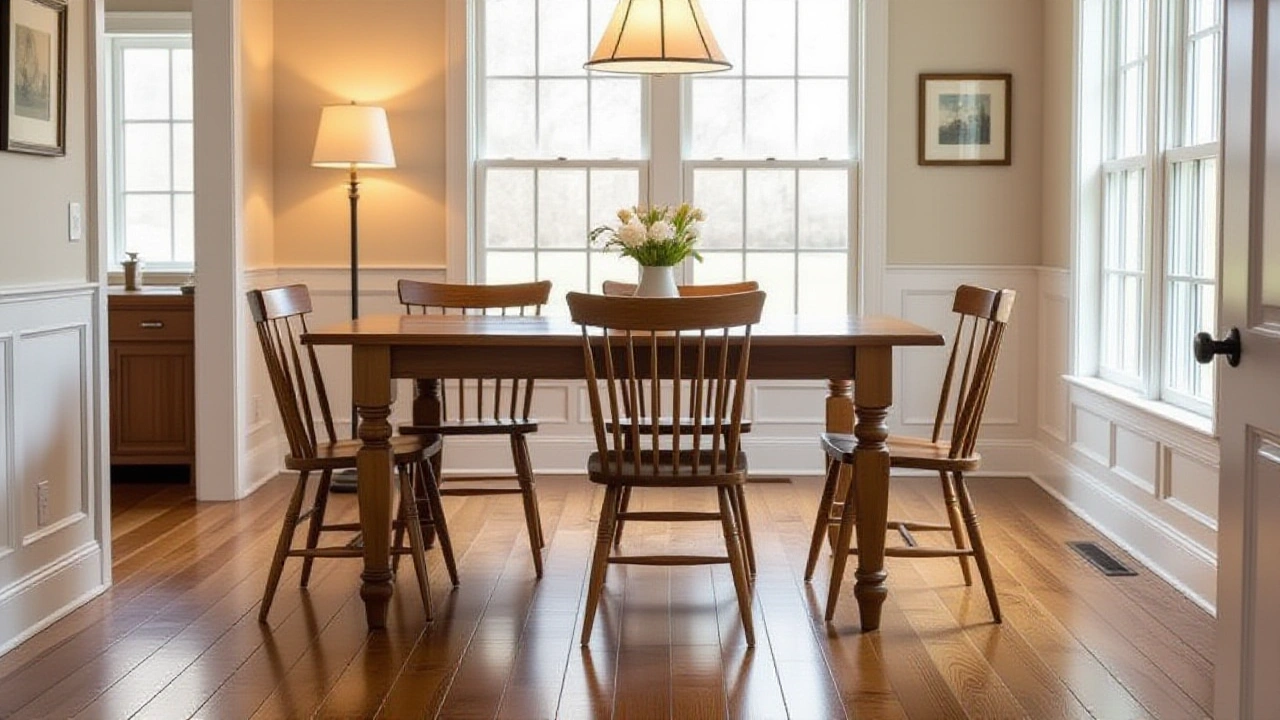
Hardwood
Hardwood, solid or engineered
Real wood, picked in a showroom or at your kitchen table, then measured and put down by the people who sold it to you.
Or call (615) 277-5678 — Monday to Friday, 9 to 5.
Solid or engineered: which one fits the house
Solid hardwood is one piece of wood from top to bottom. Engineered hardwood, as Bruce describes it, “uses a plywood core with a thin layer of hardwood on top.” Both look like wood because both are wood on the surface.
Where the floor is going decides most of it. The National Wood Flooring Association’s installation guidelines say solid floors should not go below grade, while engineered can be installed above, on or below it. A basement, or a room poured on a slab, usually points to engineered.
How many times it can be sanded
The NWFA gives no number for solid wood, only that it can be sanded and refinished “numerous times” over its life. Bruce puts its own estimate on ¾-inch solid: generally four or five times.
With engineered wood it comes down to the hardwood layer on top. The NWFA’s refinishable standard sets 2.5 mm (3/32 inch) as the floor for a factory-finished board and says one thinner than that should not be sanded at all. Bruce lists a standard veneer of 1/16 inch and better ones of 3/32 and 1/8. Ask for the number on any sample you like.
Before the first board goes down
Wood moves with the air in the house. The NWFA’s guidelines call for the room to sit between 30 and 50% relative humidity and between 60 and 80°F, and for a wood subfloor to be checked against the flooring: within 4 points of moisture for strip narrower than 3 inches, within 2 for wider plank. That is part of why the estimate starts with a look underneath.
The old site listed three ways in: floating, glue-down and nail-down. Which one depends on the board and on what it sits on.
On the sample racks
Bruce makes both kinds; its Dundee line is solid Appalachian oak. Mohawk’s TecWood is engineered, and its TecWood Select is a ½-inch plank with a 2 mm veneer rated for on, above or below grade. Already have wood that looks tired? See hardwood refinishing first.
Questions
Hardwood flooring, answered
How much does hardwood flooring cost installed?
That comes from the in-home measure, not a per-foot guess. Solid or engineered, the species and plank width, the install method, the stairs, what comes up first and how level the subfloor is all change it. Book the measure on (615) 277-5678 and the number follows.
Can hardwood flooring go in a basement?
Engineered hardwood can; solid should not. The NWFA’s installation guidelines say solid wood should not be installed below grade, while engineered can go above, on or below it. Bruce says the same in its own FAQ, and names basements among the places engineered can go.
How many times can solid hardwood be sanded?
Many times. The NWFA says only that solid wood can be sanded and refinished numerous times over its life and gives no number; Bruce estimates four or five times for ¾-inch solid. How much wood each sanding takes off depends on the floor’s condition.
Is engineered hardwood real wood?
Yes, on the surface. Bruce describes engineered hardwood as a plywood core with a thin layer of real hardwood on top, so it looks and feels like wood. Its standard veneer is 1/16 inch and its thicker ones 3/32 and 1/8 inch, which decides how often it can be refinished.
Does hardwood flooring need to acclimate before it is installed?
The room does. The NWFA’s guidelines call for the house to sit between 30 and 50% relative humidity and between 60 and 80°F, and for a wood subfloor’s moisture to be within 4 points of strip flooring or 2 points of wider plank before the boards go down.
Can hardwood be installed over concrete?
Yes, when the slab is prepared for it. The NWFA says solid and engineered wood can both go over concrete that is properly prepared: dry, at least 3,000 psi, and with a vapor retarder strongly recommended. Engineered is the usual choice on a slab at or below grade.